

DietitiansPeriodized fueling plans
Targets per runner and per day type: race day, long-run day, workout day and recovery. Lumo turns them into meals, menus and nudges.
Lumo Fit for college cross country staff
Lumo Fit turns your dietitian's plan into every meal, on campus, on the course and on the road, then sets what runners actually ate next to the mileage, lab and sleep data your staff already collects.
Plugs into your stack, so nobody re-types a number.Connectors in development for tracking and load, sleep and HRV, force plates, body composition, labs and athlete management. Logos are trademarks of their owners and do not imply partnership.
Lumo Fit gives every runner one living fueling plan, carried into the training table and lined up against what the mileage costs.

Low energy availability and low iron rarely announce themselves. They show up as a flat block, a missed cycle, a slow recovery, then a bone scan.
A weekly screen per runner. Energy availability is estimated from logged intake, body composition and training energy expenditure, and flagged when it runs low for consecutive weeks. Iron status comes from the lab results your medical staff shares, trended against intake and training. Flags go to the dietitian and physician, not the coach, and every flag names what to check next.
Distance runners have the highest energy turnover on campus and the thinnest margin for under-eating. Low energy availability affects men and women, suppresses hormones, weakens bone and raises the risk of stress fractures; low iron does the same to oxygen delivery and recovery. Both are common, both are quiet, and both are easier to catch from a screen than from a conversation.
Energy availability thresholds from the 2016 joint position stand on nutrition and athletic performance and the consensus on relative energy deficiency in sport. The screen flags; your physician diagnoses.


Fueling touches every department
Targets per runner and per day type: race day, long-run day, workout day and recovery. Lumo turns them into meals, menus and nudges.
Carbs, hydration and recovery meals lined up against mileage, workout splits, body composition and sleep.
Iron, vitamin D and body composition next to intake, visible only to the staff who should see them.
It's 07:40 on a Friday, the women's race at 10:00 and the men's at 11:15. Step into the shoes of the team dietitian at breakfast with the weekly screen open.
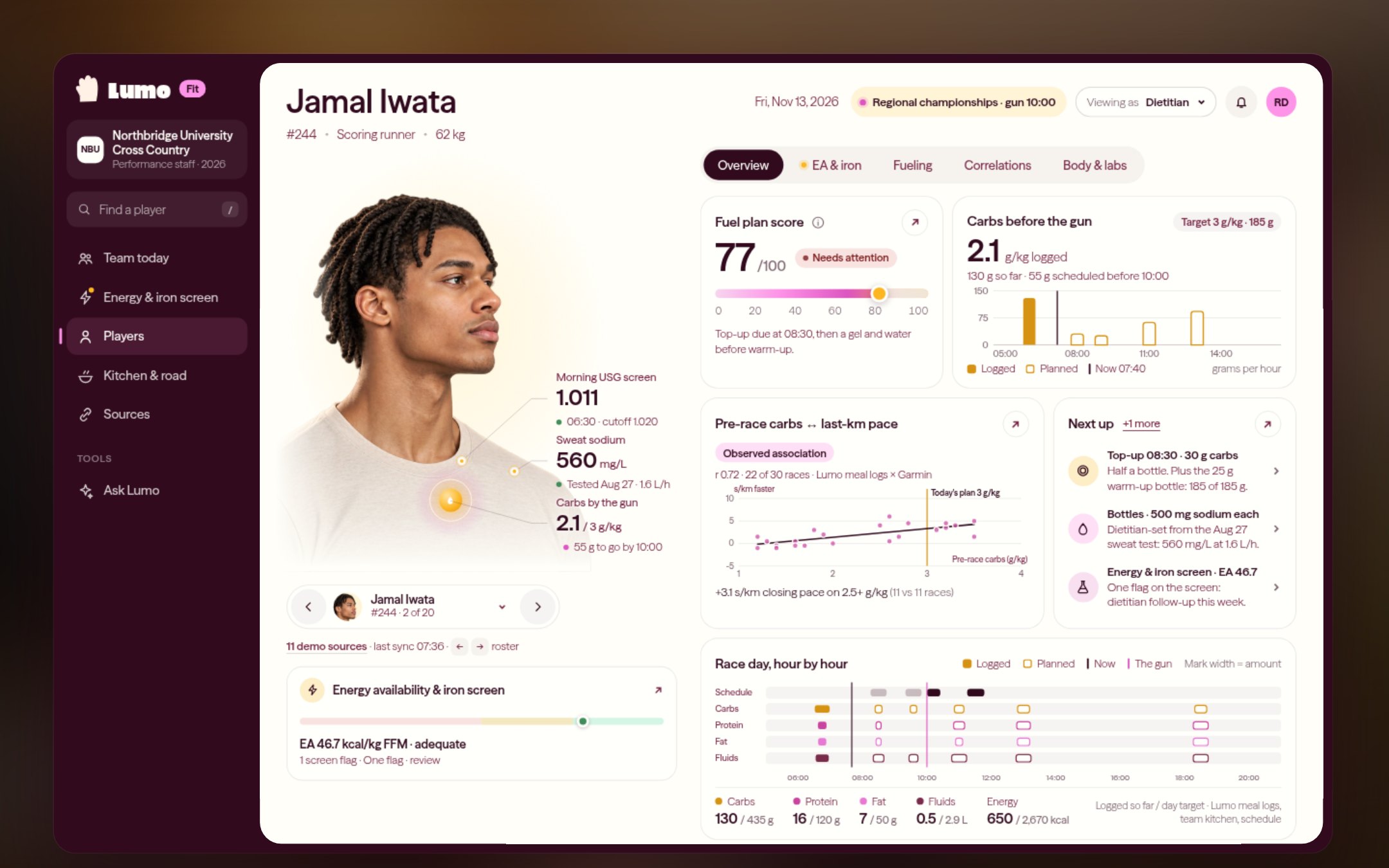
Taking applications from a small group of founding teams.
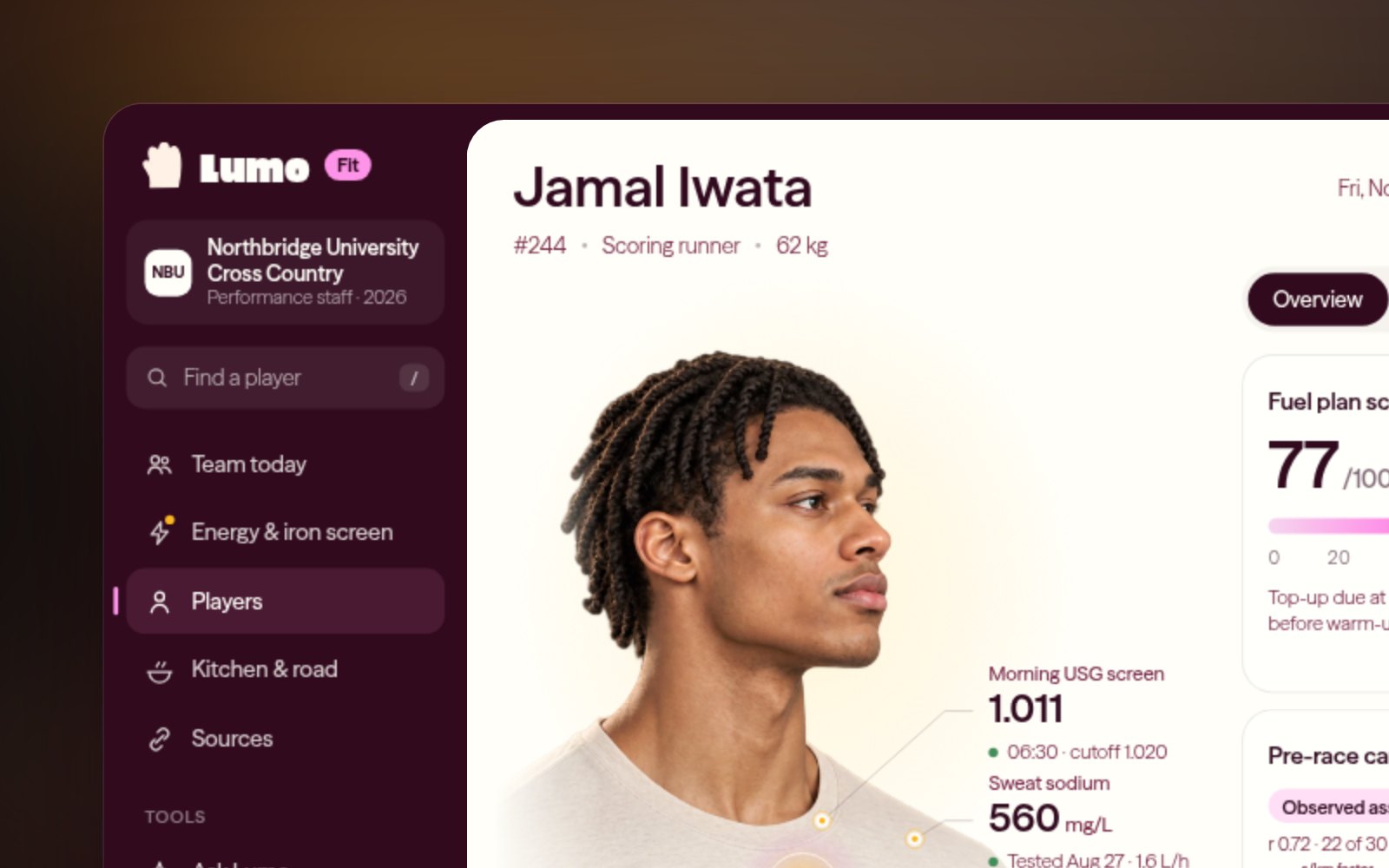
Energy availability, carbs before the gun and hydration, laid out around the runner, with a fuel plan score: how this week's intake tracks the plan your dietitian set, 0 to 100.
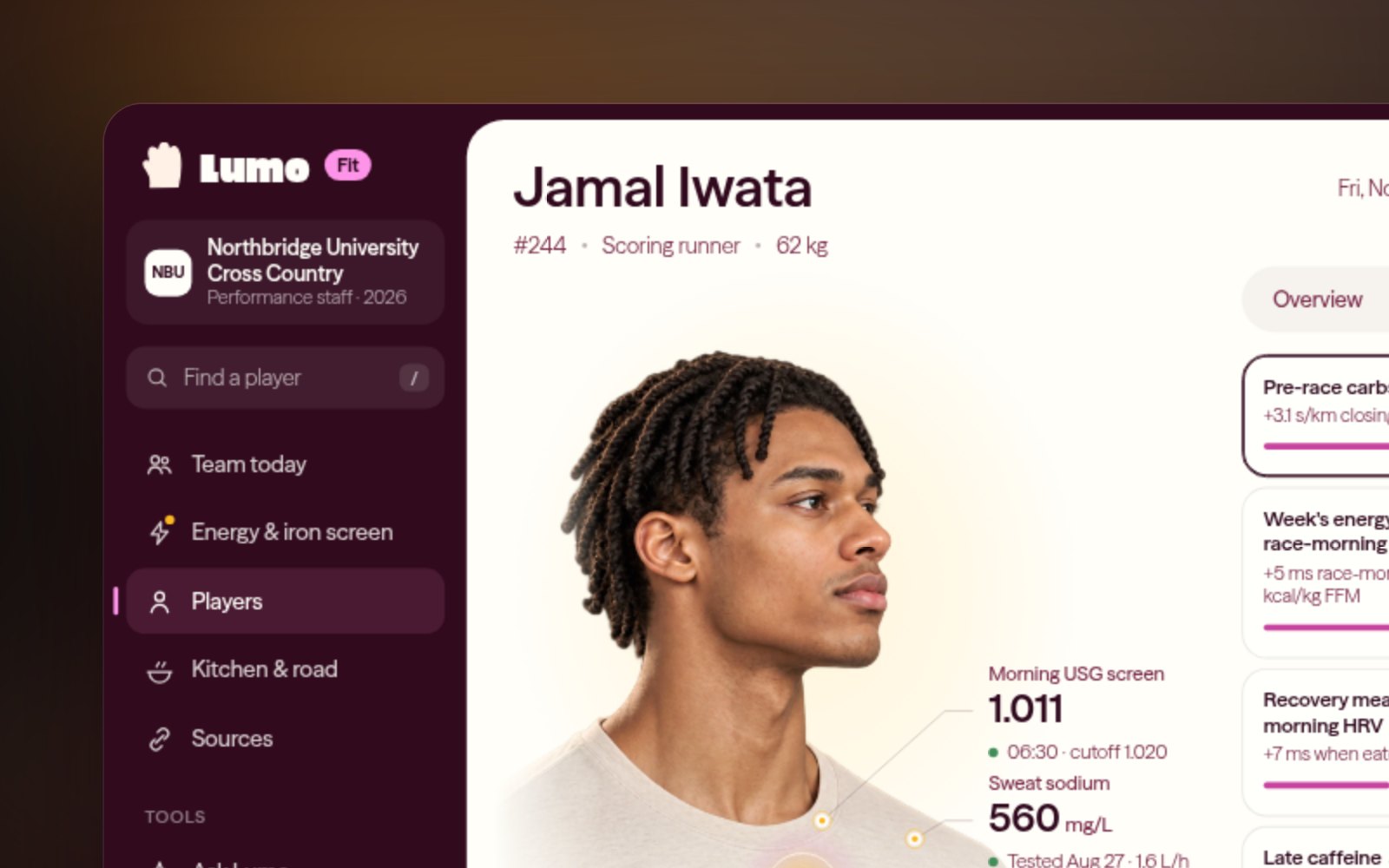
Energy availability against training response and injury flags. Ferritin trend against intake in the distance group. Pre-race carbs against last-kilometre split. Lumo lines intake up with the data you already collect and shows how strong each relationship is, with the sample size next to it, so your staff draws the conclusion.
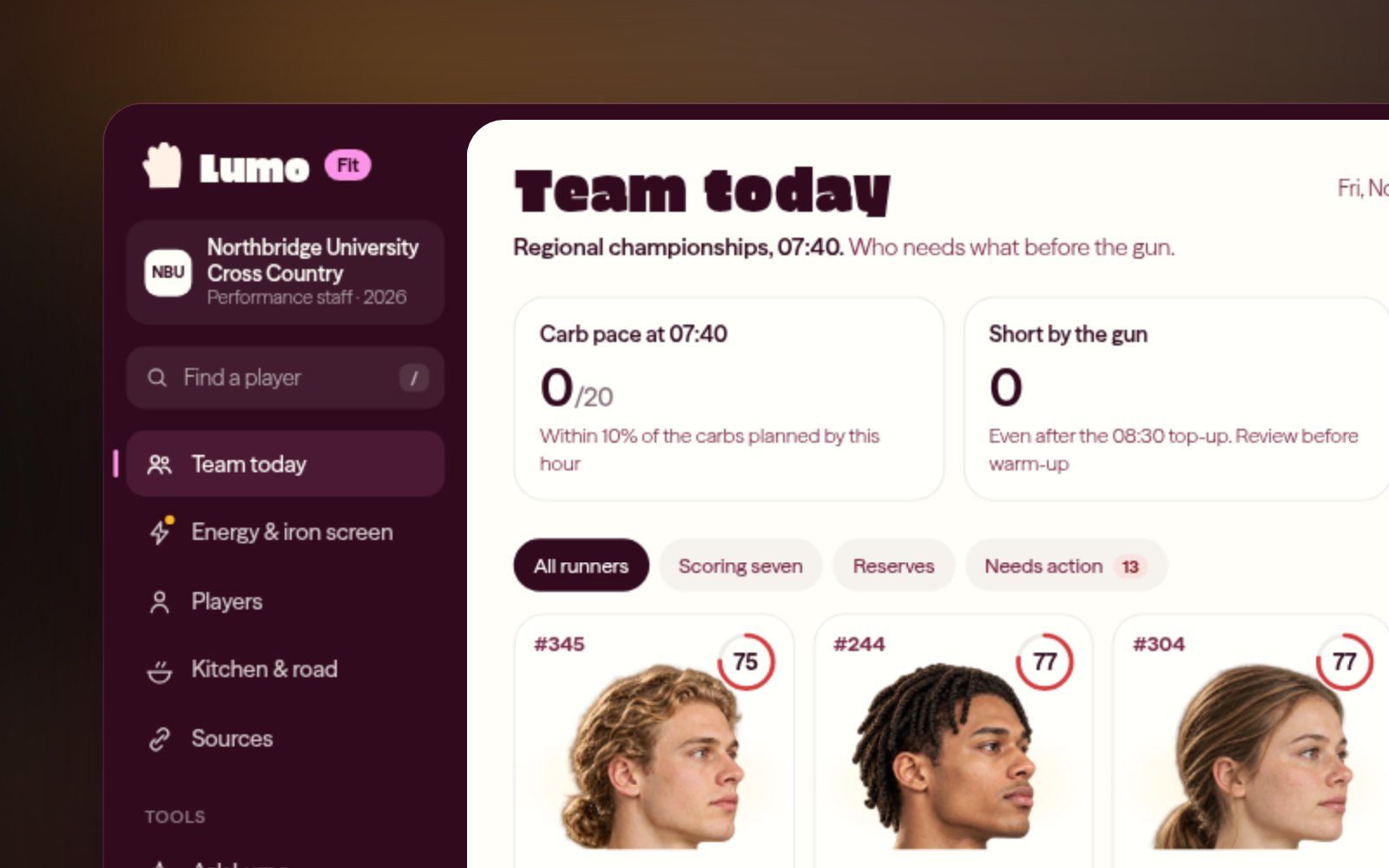
Who is under-fuelled this week, whose screen needs a recheck, who is racing on Saturday. Coaches get readiness; energy availability and labs stay with medical staff.
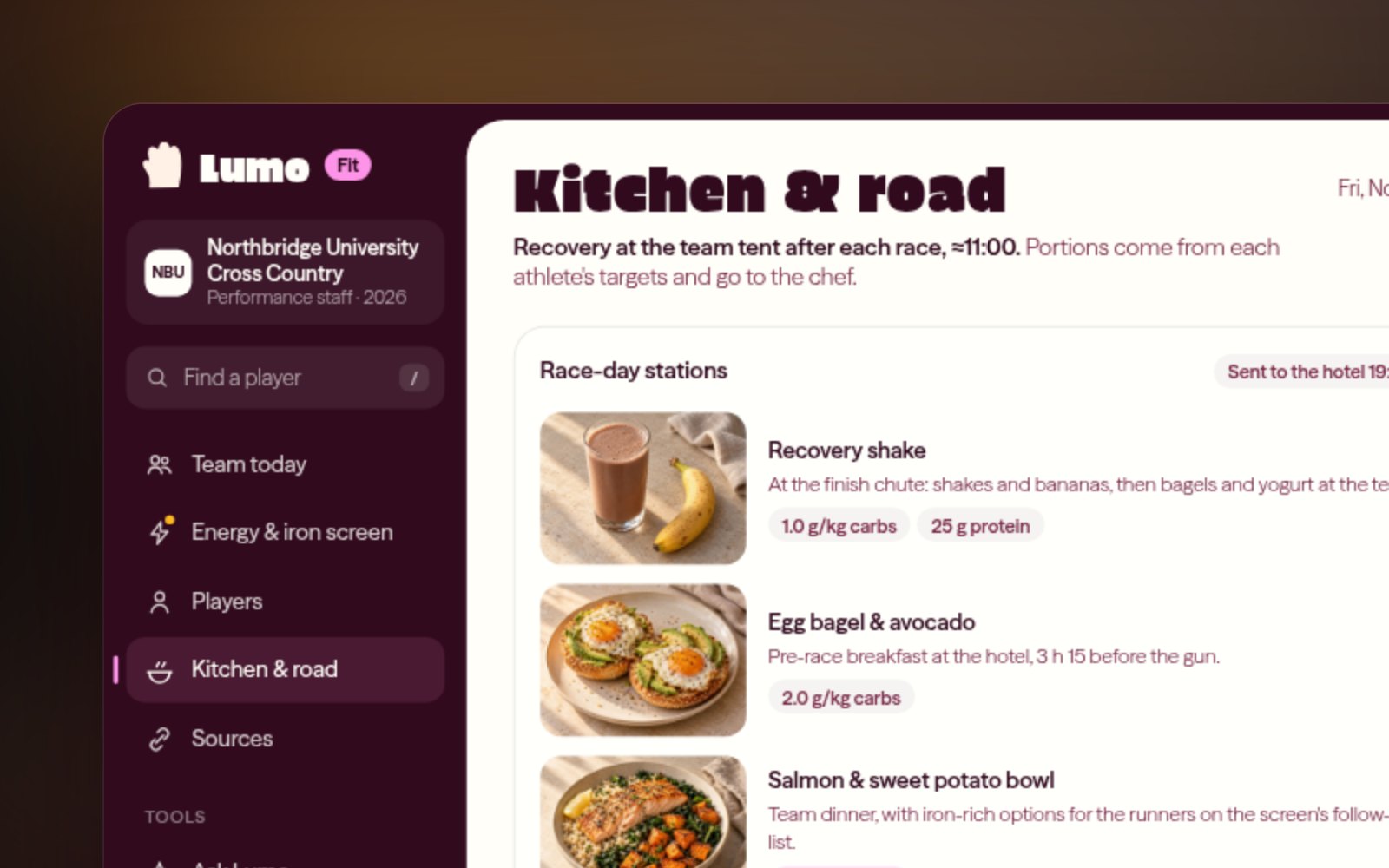
Training-table portions sized to the week's mileage, the race-day cooler and hotel orders on the road, all calculated from each runner's targets. Runners see their plate in the Lumo app.
No. It is an estimate from intake, body composition and training load, plus the labs your medical staff chooses to share. A flag means check, not treat. Your physician and dietitian decide what it means and what to do; coaches never see it.
Yes. Low energy availability affects men and women, and the screen runs the same way for both. Iron screening follows whatever lab schedule your medical staff sets.
Your physician. Lumo shows ferritin and intake side by side so the conversation starts with data, but it never recommends a supplement or a dose.
Lumo for college cross country programs. It turns the dietitian's fueling plan into meals, menus and nudges for runners and the team kitchen, and lines intake up with the performance, sleep and medical data your staff already collects.
We're building first-party connectors for the tools performance staff use most: runner tracking and load, sleep and HRV wearables, force plates, body composition, lab results and athlete management systems. On our list: Catapult, Firstbeat, KINEXON, Polar, Sportlogiq, league tracking data, Teamworks, Gatorade Gx, Dexcom, WHOOP, Oura, Hawkin Dynamics, VALD, InBody, Hologic DXA, Kitman Labs, Edge10, LifeLabs, Garmin and Apple Health. None of these are partnerships yet. Tell us your stack when we reach out and we'll prioritise it.
Access follows the role. Dietitians and medical staff see labs and body composition; strength and conditioning sees fueling next to load; coaches see readiness summaries. Runners see their own plan in the Lumo app.
No. Your dietitian sets the targets and approves the plan. Lumo carries it into every meal, on the road too, and brings the signal back before it becomes a problem.
No. The team, the runners and every number in the demo are fictional, generated for illustration. Runner portraits are AI-generated and do not depict real people. When we work with a team, we build their preview on their own roster, privately.
We're selecting a small group of founding teams for the 2026–27 season. Join the waitlist and we'll reach out to set up a working session with your staff.
Pro and college programs, college sports, clubs, and a department view for athletic directors. Every demo runs on a fictional team with synthetic data.