DietitiansPeriodized fueling plans
Targets per player and per day type: game day, midweek games, practice and travel. Lumo turns them into meals, menus and nudges.
Lumo Fit for college field hockey staff
Lumo Fit turns your dietitian's plan into every meal and every bottle on the bench, on campus, at the turf and on the road, then sets what players actually ate and drank next to the GPS, force-plate and sleep data your staff already collects.
Plugs into your stack, so nobody re-types a number.Connectors in development for tracking and load, sleep and HRV, force plates, body composition, labs and athlete management. Logos are trademarks of their owners and do not imply partnership.
Lumo Fit gives every player one living fueling plan, carried into the bench cooler and lined up against what happens on the turf.
A forward who rotates every six minutes and a centre back who never comes off need different bottles at the same break. Lumo sizes them from the minutes.
A game-day plan that reads minutes played, from the GPS feed or the bench sheet. Each quarter break and halftime has a bottle and a top-up per player, sized to the minutes just played and the sweat test; the recovery meal after the game is sized to the whole game's minutes. A player who played twenty minutes is not fed like one who played sixty, and the bench list says who gets what.
Field hockey is played in four quarters on watered turf with unlimited rolling substitutions, so the load across a roster is more uneven than in almost any other field sport, and the breaks are short. A plan that gives everyone the same bottle over-serves the rotating forwards and under-serves the players who stay on. Minutes are the signal, and the staff already has them.
Carbohydrate guidance from the 2016 joint position stand on nutrition and athletic performance; game timings from the rules of the sport. Your dietitian sets each player's actual targets.


Fueling touches every department
Targets per player and per day type: game day, midweek games, practice and travel. Lumo turns them into meals, menus and nudges.
Carbs, hydration and recovery meals lined up against GPS distance, high-speed running, force plates and sleep.
Iron, vitamin D and body composition next to intake, visible only to the staff who should see them.
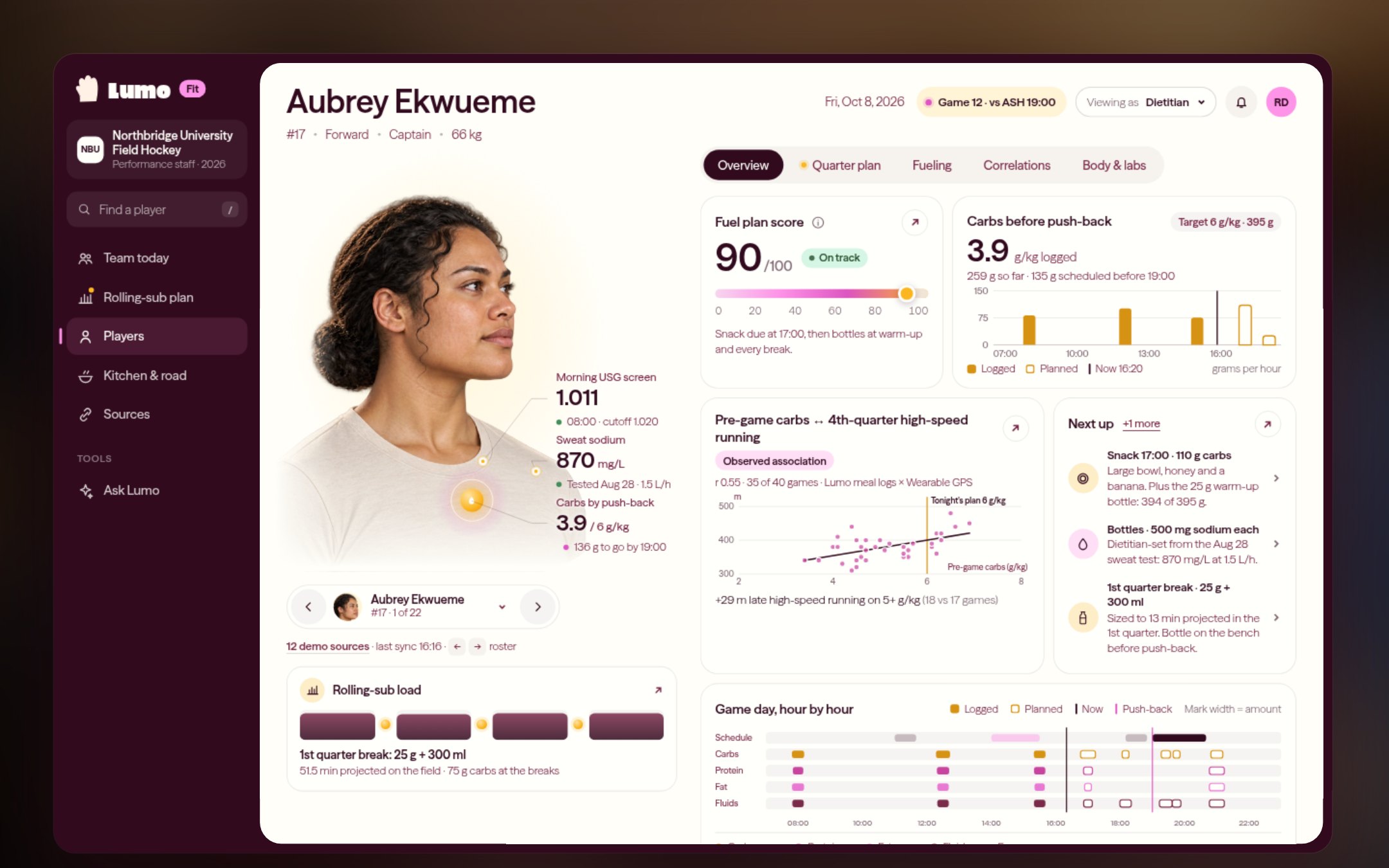
It's 16:20 on a Friday, push-back at 19:00. Step into the shoes of the team dietitian before warm-up, with last game's minutes per player already in the plan.
Taking applications from a small group of founding teams.
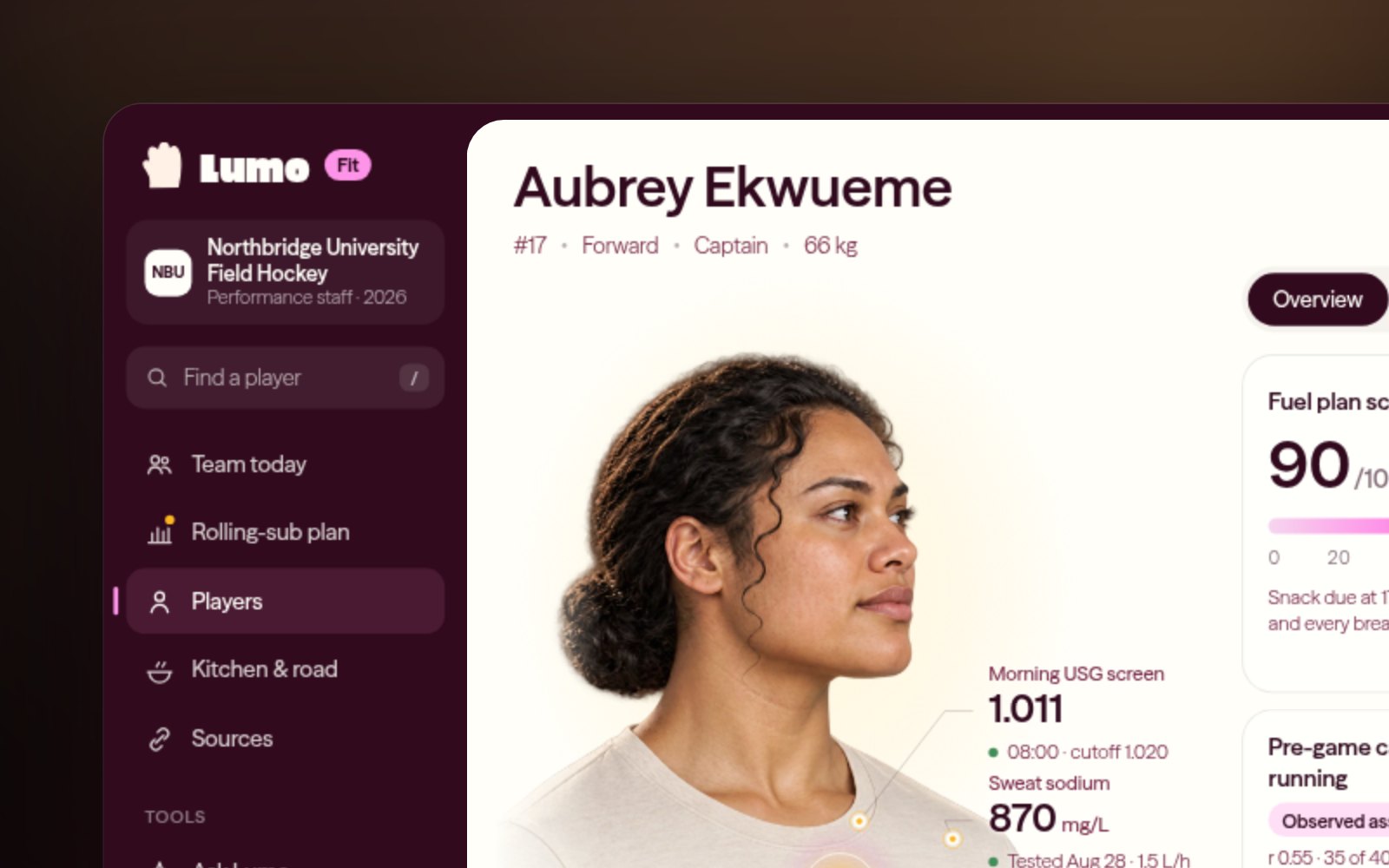
Carbs before push-back, hydration and sweat sodium, laid out around the player, with a fuel plan score: how today's intake tracks the plan your dietitian set, 0 to 100.
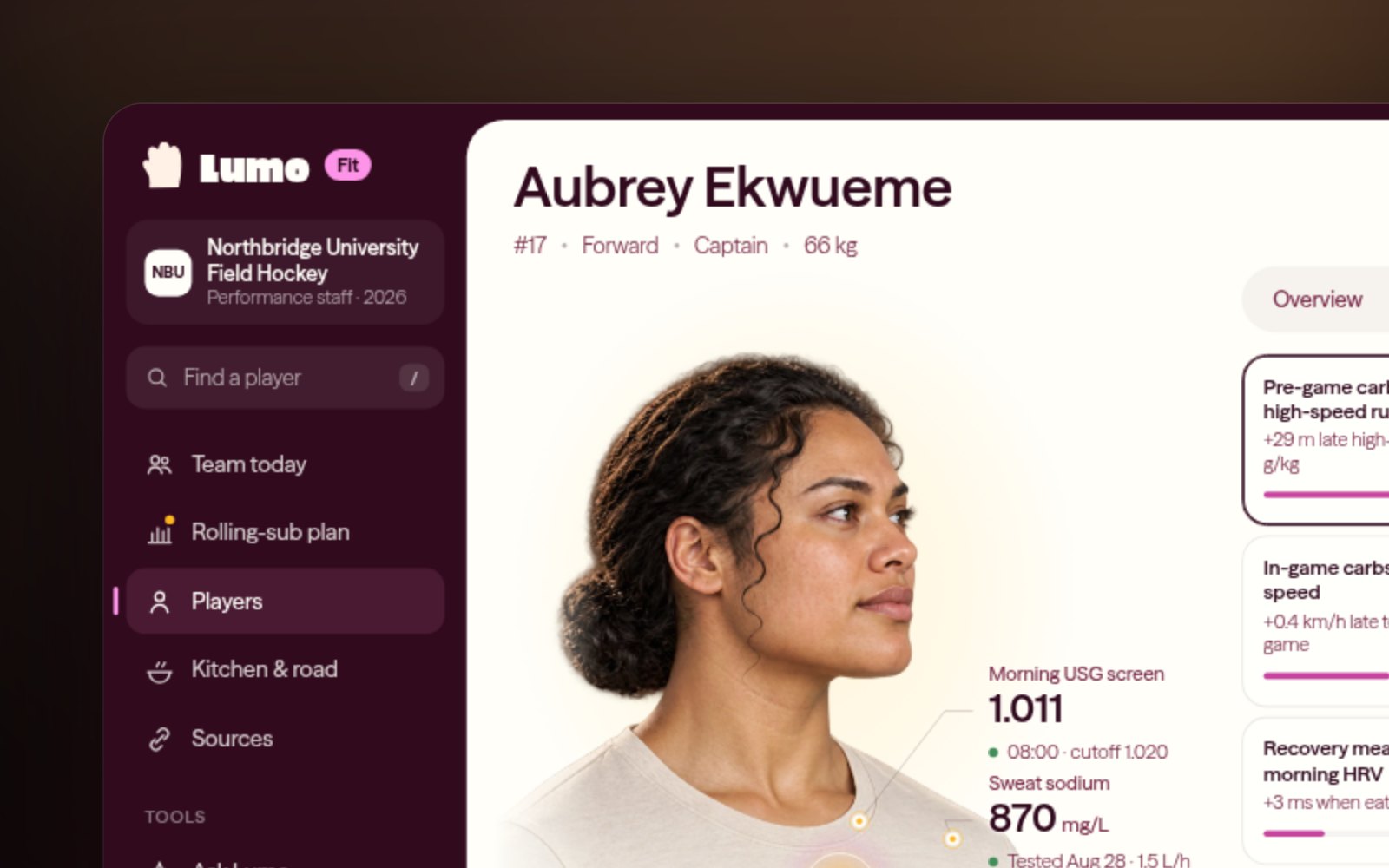
Minutes played against fluid loss by player. Pre-game carbs against fourth-quarter high-speed running. The halftime top-up against second-half sprint counts. Lumo lines intake up with the data you already collect and shows how strong each relationship is, with the sample size next to it, so your staff draws the conclusion.
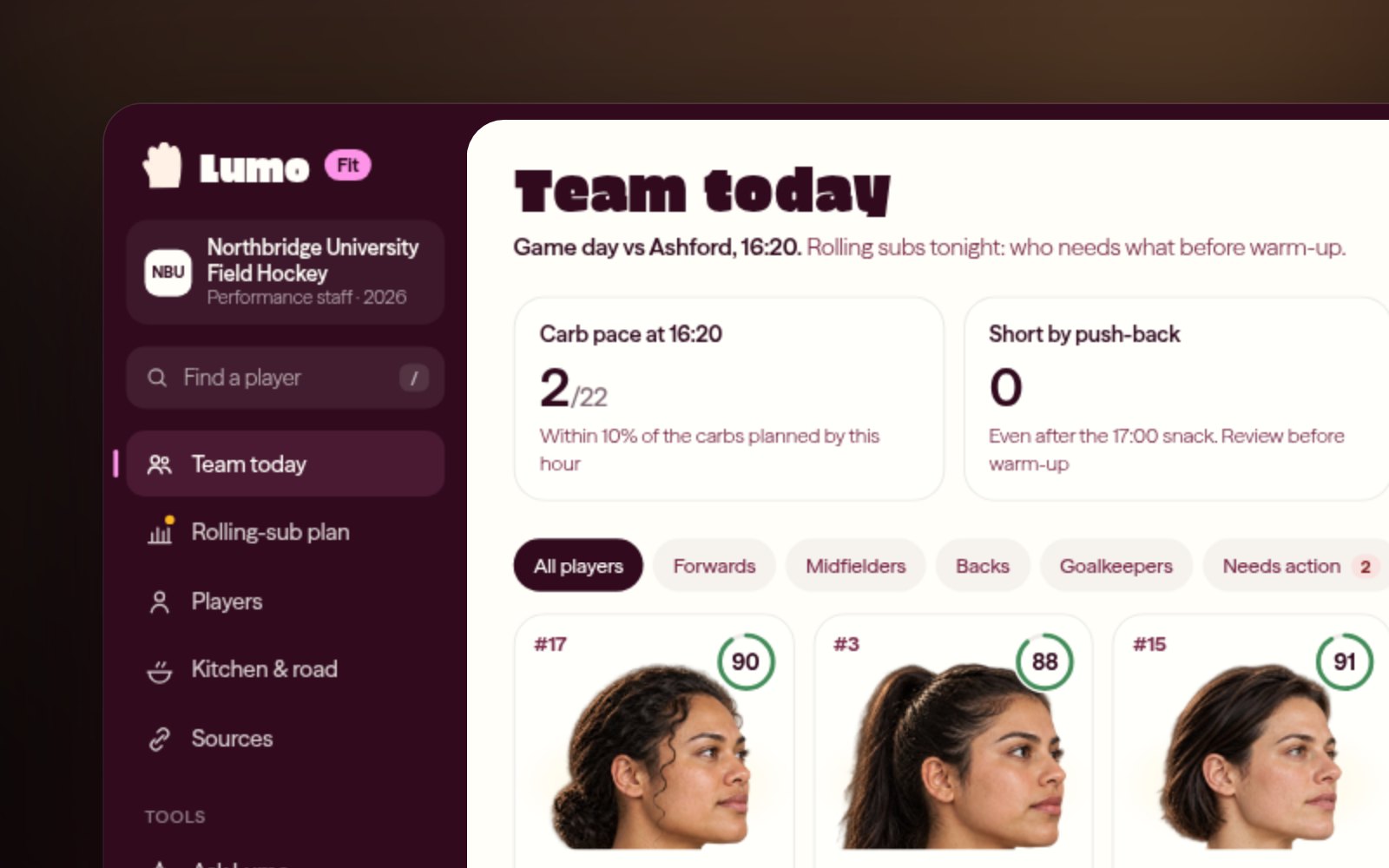
Who is under-fuelled before push-back, who needs fluids before warm-up, who sweats out the most sodium. Coaches get readiness; medical detail stays with medical staff.
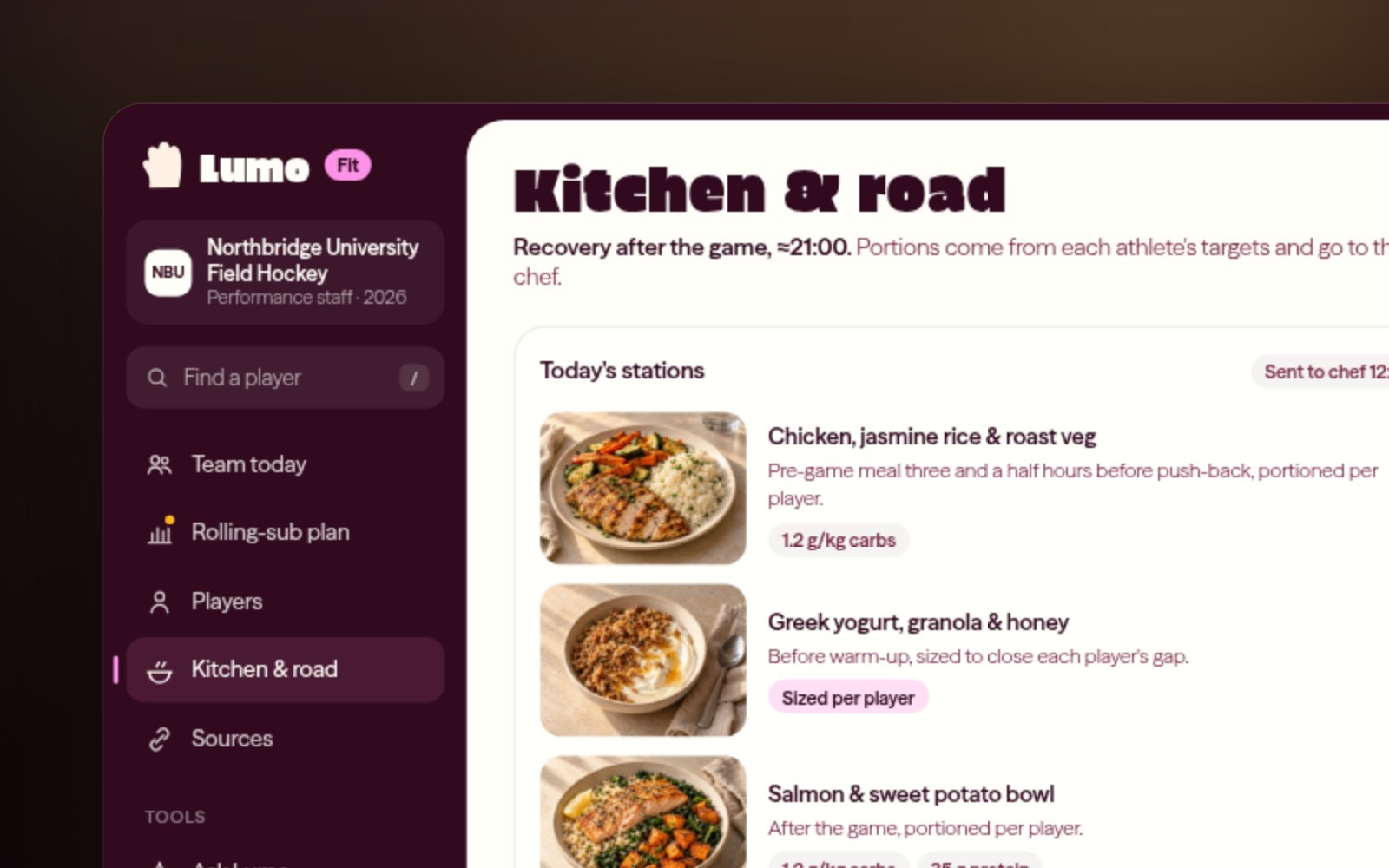
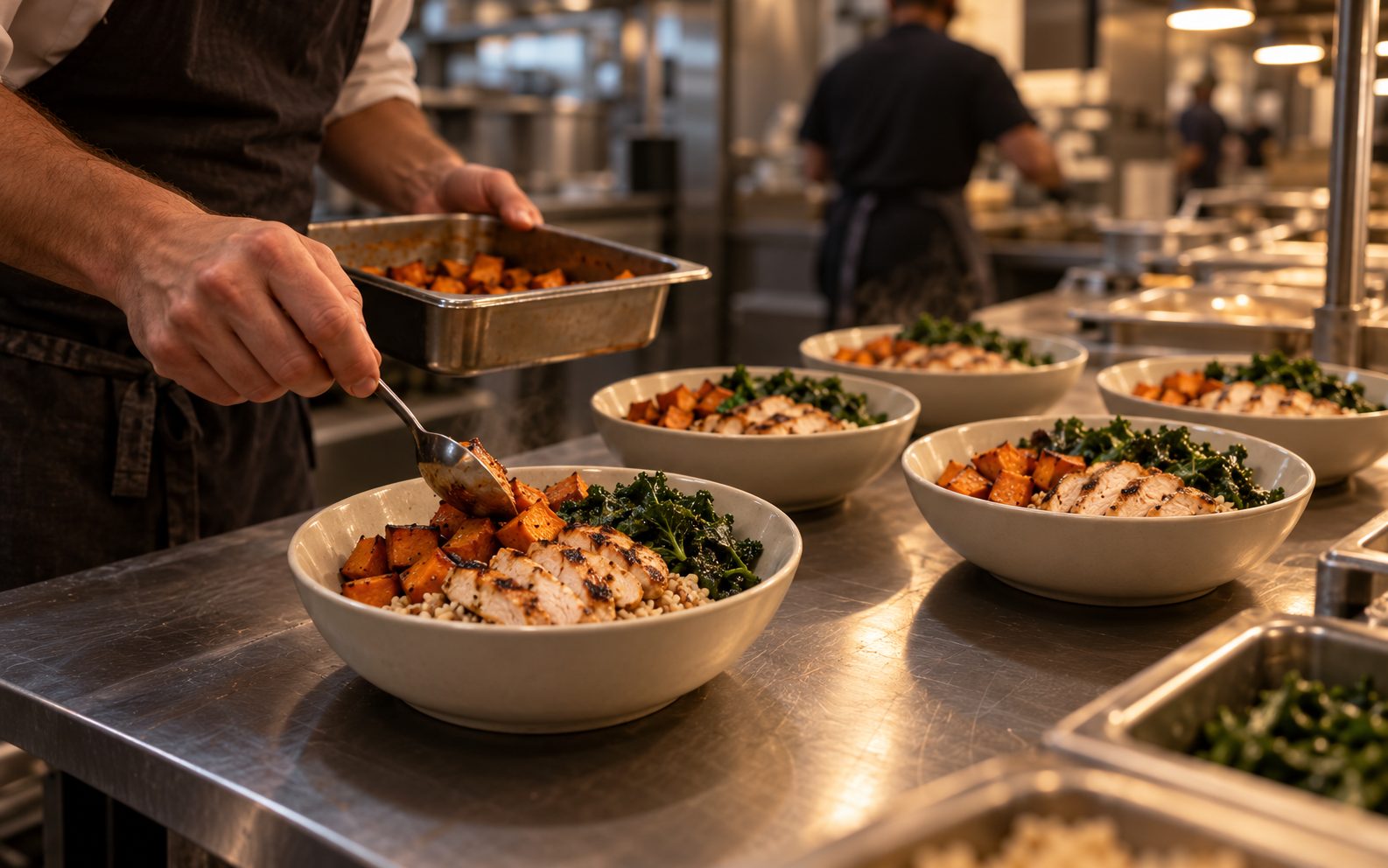
Pre-game meals on campus, the bench list per break and hotel orders on the road, all calculated from each player's targets. Players see their plate in the Lumo app.
From the GPS units your staff already uses, if you connect them, or from the bench sheet a manager keeps. Either way the plan at each break is sized to what each player just played.
The breaks are two minutes, so nothing is decided there. Bottles are filled to the plan before the game and labelled per player; the halftime top-up is the only slot with a choice in it, and the list is on the cooler.
Yes. Weekday practices, midweek games and travel days are planned around class blocks. Programs inside an athletic department should also look at the college page, which adds a department view across every sport.
Lumo for college field hockey programs. It turns the dietitian's fueling plan into meals, menus and nudges for players and the team kitchen, and lines intake up with the performance, sleep and medical data your staff already collects.
We're building first-party connectors for the tools performance staff use most: player tracking and load, sleep and HRV wearables, force plates, body composition, lab results and athlete management systems. On our list: Catapult, Firstbeat, KINEXON, Polar, Sportlogiq, league tracking data, Teamworks, Gatorade Gx, Dexcom, WHOOP, Oura, Hawkin Dynamics, VALD, InBody, Hologic DXA, Kitman Labs, Edge10, LifeLabs, Garmin and Apple Health. None of these are partnerships yet. Tell us your stack when we reach out and we'll prioritise it.
Access follows the role. Dietitians and medical staff see labs and body composition; strength and conditioning sees fueling next to load; coaches see readiness summaries. Players see their own plan in the Lumo app.
No. Your dietitian sets the targets and approves the plan. Lumo carries it into every meal, on the road too, and brings the signal back before it becomes a problem.
No. The team, the players and every number in the demo are fictional, generated for illustration. Player portraits are AI-generated and do not depict real people. When we work with a team, we build their preview on their own roster, privately.
We're selecting a small group of founding teams for the 2026–27 season. Join the waitlist and we'll reach out to set up a working session with your staff.
Pro and college programs, college sports, clubs, and a department view for athletic directors. Every demo runs on a fictional team with synthetic data.