

DietitiansPeriodized fueling plans
Targets per golfer and per day type: 36-hole days, 18-hole days, practice and travel. Lumo turns them into meals, menus and nudges.
Lumo Fit for college golf staff
Lumo Fit turns your dietitian's plan into every meal and every snack in the bag, on campus, on the course and on the road, then sets what golfers actually ate next to the scoring, round and sleep data your staff already collects.
Plugs into your stack, so nobody re-types a number.Connectors in development for tracking and load, sleep and HRV, force plates, body composition, labs and athlete management. Logos are trademarks of their owners and do not imply partnership.
Lumo Fit gives every golfer one living fueling plan, carried into the bag and lined up against what happens on the course.

Golf is low intensity and very long. The failure is not cramp or glycogen, it is a lapse in concentration on the fourteenth hole, and that is a fueling problem too.
A plan printed on the course: which holes get a snack, which get a drink, what goes in the bag for a 36-hole day and when the turn is a meal. It is sized to each golfer's targets and the forecast, and it reads the course so the snack lands before the long par five, not after it. The dietitian sets the food list; the bag is packed from it.
A walked round covers several miles over five hours, often in heat, and a college tournament's first day doubles it. Blood sugar and hydration drift slowly over that time and show up as poor decisions and loose swings late in the round rather than as fatigue. Golfers rarely feel hungry on the course, so eating has to be scheduled, not felt.
Round lengths and distances are typical figures for a walked course and vary by venue. Your dietitian sets each golfer's actual targets.


Fueling touches every department
Targets per golfer and per day type: 36-hole days, 18-hole days, practice and travel. Lumo turns them into meals, menus and nudges.
Carbs, hydration and recovery meals lined up against round duration, steps, heat and sleep.
Iron, vitamin D and body composition next to intake, visible only to the staff who should see them.
It's 12:50 on a Friday, round one done and round two at 13:20. Step into the shoes of the team dietitian with half an hour at the turn to refill five bags.
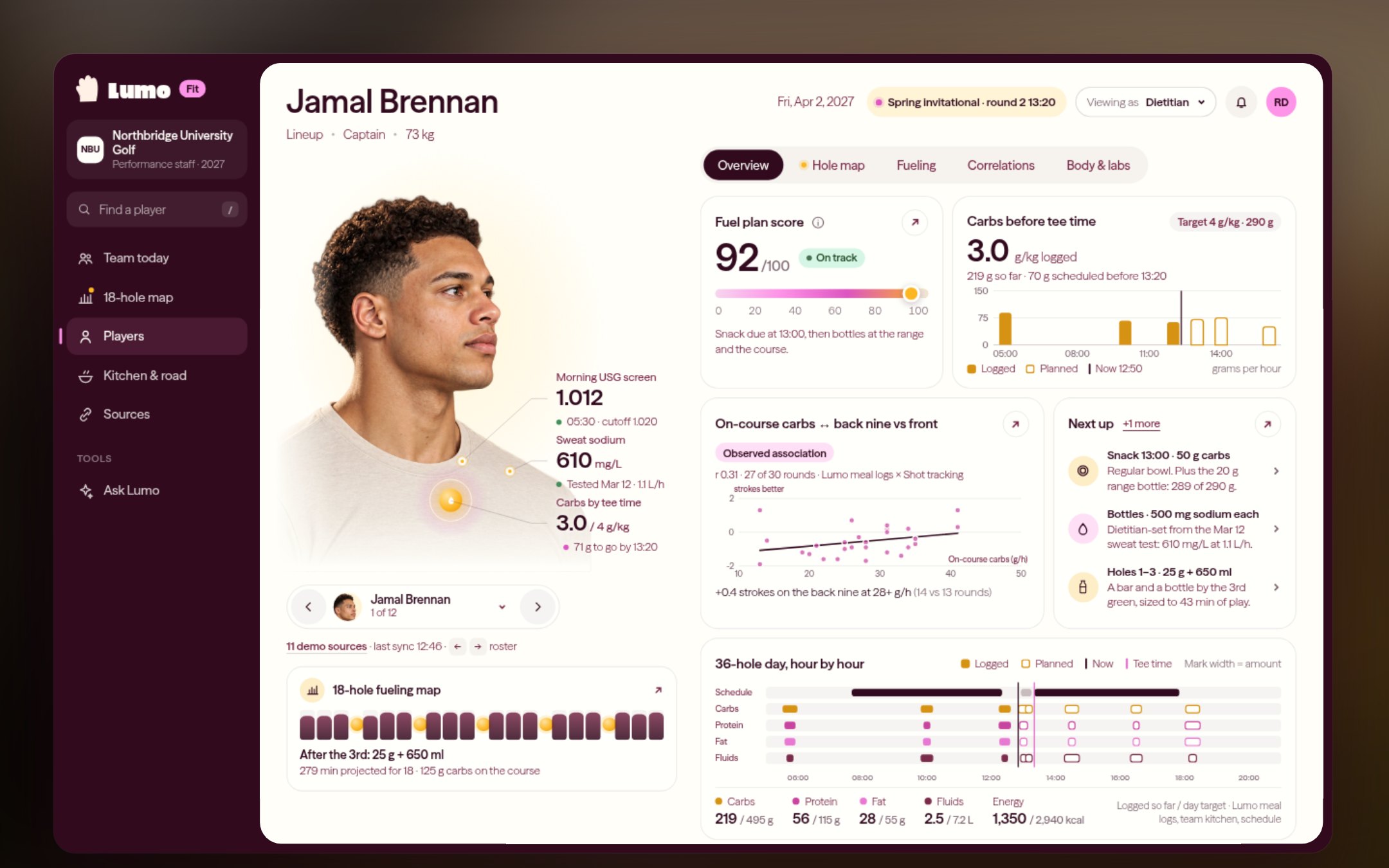
Taking applications from a small group of founding teams.
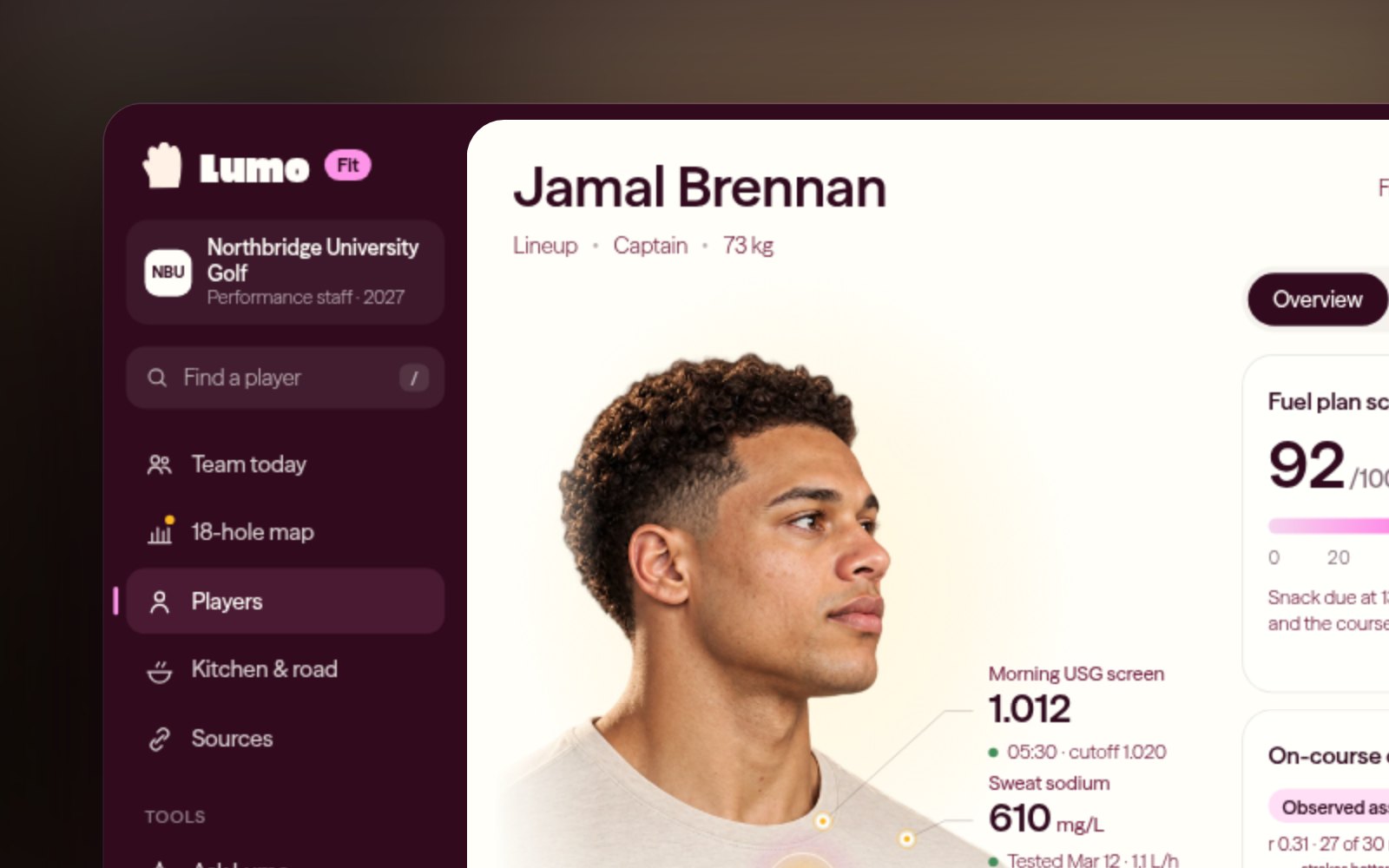
Today's fueling map, hydration in the heat and the pre-round meal, laid out around the golfer, with a fuel plan score: how today's intake tracks the plan your dietitian set, 0 to 100.
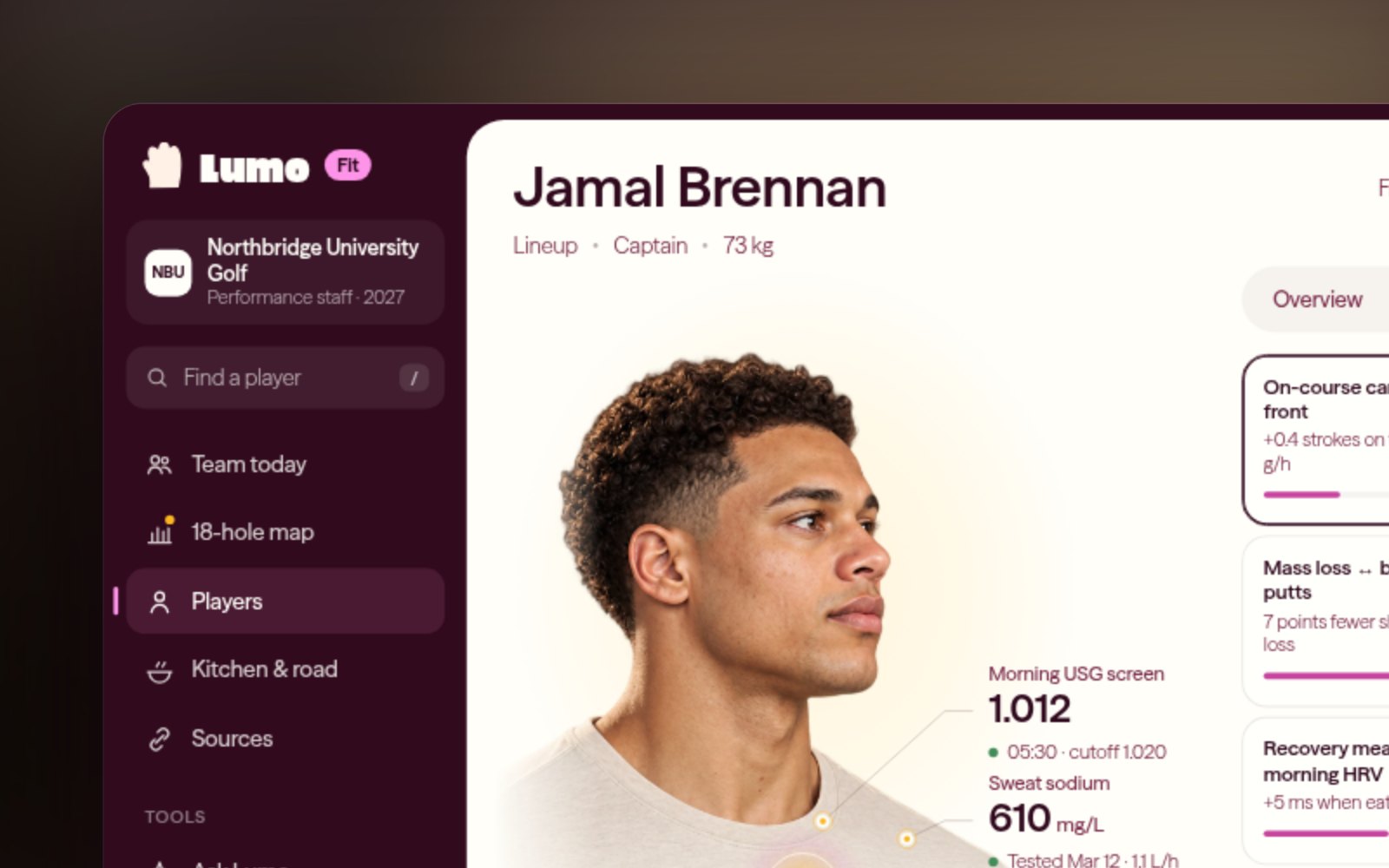
Snack timing against back-nine scoring average. Fluid intake on hot days against late-round putts per hole. Breakfast timing against front-nine scoring. Lumo lines intake up with the data you already collect and shows how strong each relationship is, with the sample size next to it, so your staff draws the conclusion.
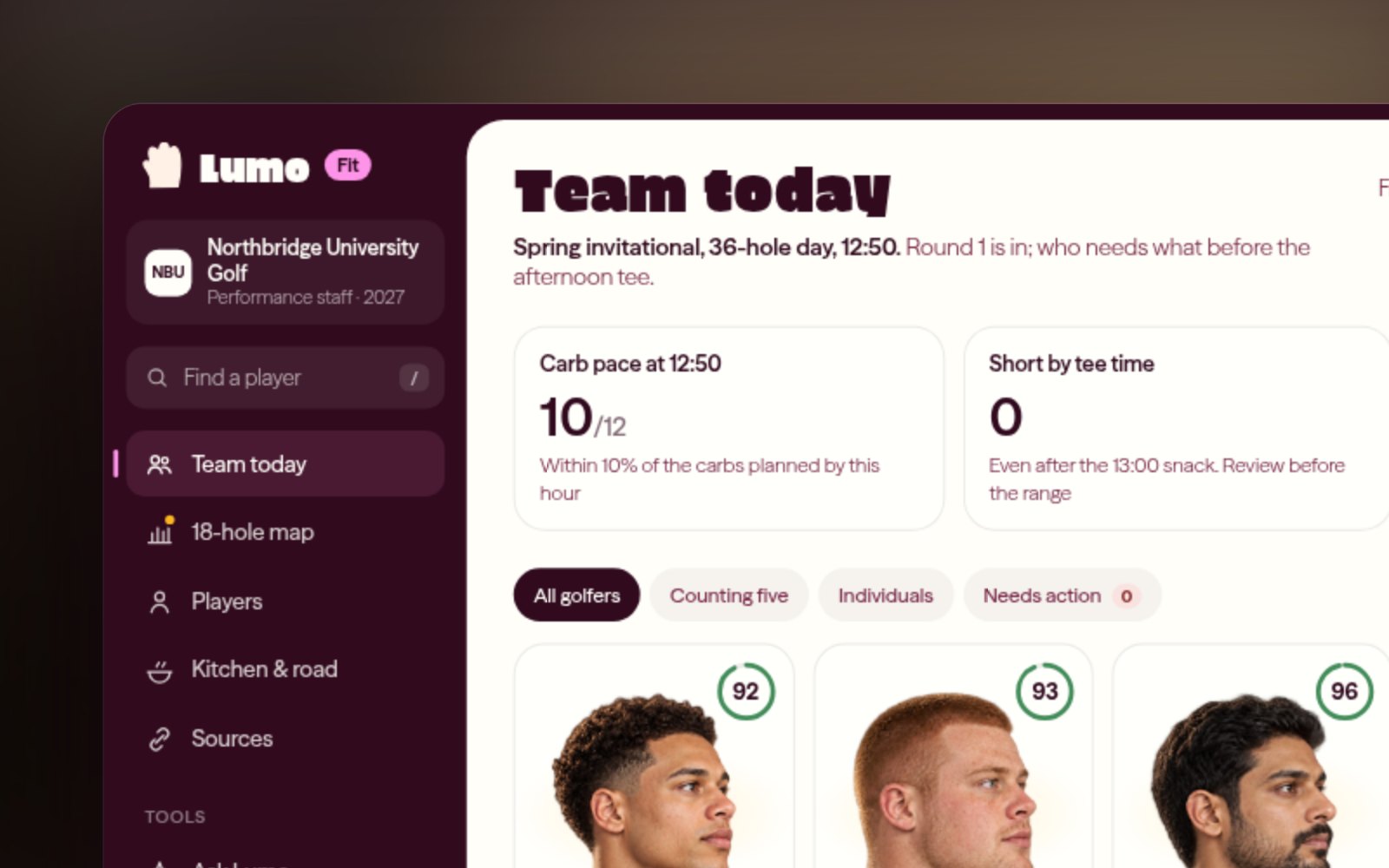
Whose bag is packed, who is behind on fluids after the front nine, who tees off next. Coaches get readiness; medical detail stays with medical staff.
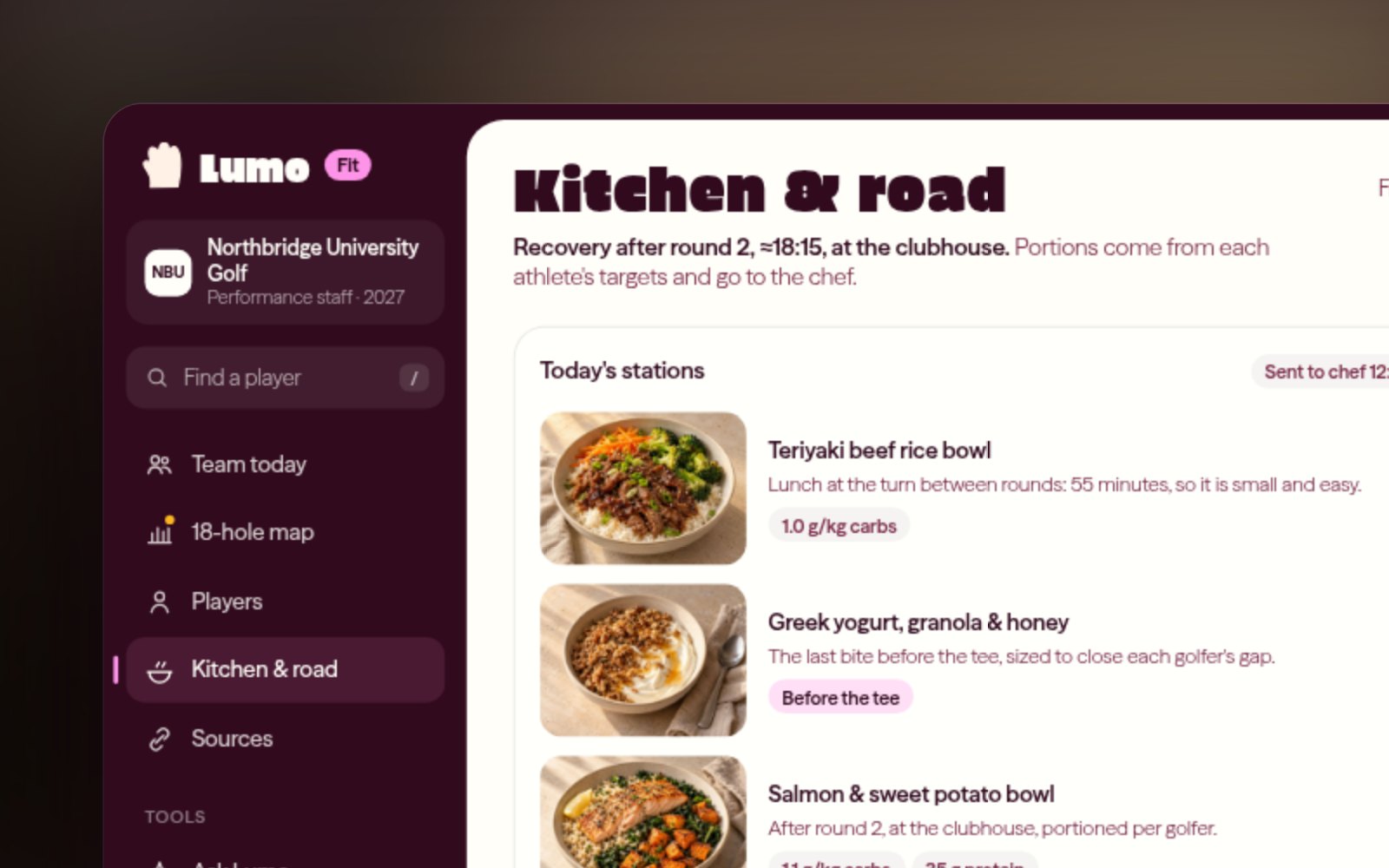
Pre-round meals, the bag list per golfer per day and hotel orders on the road, all calculated from each golfer's targets. Golfers see their plate in the Lumo app.
Not much, by design. The plan uses small, dense, familiar items from the dietitian's list and a bottle refilled at the turn and at course water stations, so the bag gains a few hundred grams, not a lunch box.
The map is by hole, not by clock, so a slow round stretches the plan rather than breaking it. A long delay adds a scheduled snack the golfer can see in the app.
Yes. Weekday practice and qualifying are planned around class blocks, and tournament travel is its own day type. Programs inside an athletic department should also look at the college page, which adds a department view across every sport.
Lumo for college golf programs. It turns the dietitian's fueling plan into meals, menus and nudges for golfers and the team kitchen, and lines intake up with the performance, sleep and medical data your staff already collects.
We're building first-party connectors for the tools performance staff use most: golfer tracking and load, sleep and HRV wearables, force plates, body composition, lab results and athlete management systems. On our list: Catapult, Firstbeat, KINEXON, Polar, Sportlogiq, league tracking data, Teamworks, Gatorade Gx, Dexcom, WHOOP, Oura, Hawkin Dynamics, VALD, InBody, Hologic DXA, Kitman Labs, Edge10, LifeLabs, Garmin and Apple Health. None of these are partnerships yet. Tell us your stack when we reach out and we'll prioritise it.
Access follows the role. Dietitians and medical staff see labs and body composition; strength and conditioning sees fueling next to load; coaches see readiness summaries. Golfers see their own plan in the Lumo app.
No. Your dietitian sets the targets and approves the plan. Lumo carries it into every meal, on the road too, and brings the signal back before it becomes a problem.
No. The team, the golfers and every number in the demo are fictional, generated for illustration. Golfer portraits are AI-generated and do not depict real people. When we work with a team, we build their preview on their own roster, privately.
We're selecting a small group of founding teams for the 2026–27 season. Join the waitlist and we'll reach out to set up a working session with your staff.
Pro and college programs, college sports, clubs, and a department view for athletic directors. Every demo runs on a fictional team with synthetic data.